A Guide to Signage Lighting Types for Modern Businesses

Introduction
Lighting can completely change the look of a sign. It can make something bold and bright, give it a softer glow, or sometimes the best choice is no lighting at all.
If you’ve heard terms like front-lit, halo-lit, or internally illuminated and wondered what they mean, you’re definitely not alone.
Each lighting style creates a different effect. The right choice depends on your building, brand, location, viewing distance, and local sign requirements.
Here are a few of the most common signage lighting types you’ll see.
Front-Lit Channel Letters
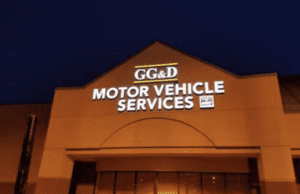 These are probably what most people picture when they think of an illuminated storefront sign. LEDs are installed inside each letter and shine through a translucent acrylic face. This makes the letters bright and easy to read at night. During the day, the faces display the colors used in the company’s logo or branding.
Front-lit channel letter signs are popular for a reason. They’re clean, visible, and work well for all kinds of businesses. You’ll see them on restaurants, retail stores, medical offices, shopping centers, and other commercial buildings throughout Arizona.
The face color, letter depth, trim color, and type of LED can all be adjusted to fit the project. We also look at the wall color to make sure the letters have enough contrast during the day.
Reverse-Lit or Halo-Lit Letters
Halo-lit letters have a completely different look. The faces are usually made from aluminum or another solid material. LEDs mounted inside the letters shine out the back and onto the wall, creating a soft halo around each letter or logo.
Reverse channel letters are a good choice when you’re looking for something a little more subtle or architectural. They’re often used for professional offices, hotels, restaurants, financial institutions, and buildings with a modern design.
The wall surface has a big effect on the finished appearance. A smooth, light-colored wall usually reflects light differently than brick, stone, stucco, or a dark metal panel. We consider that during the design process so the halo looks even and the letters remain readable.
Combination-Lit Letters
Can’t decide between front-lit and halo-lit letters? You don’t always have to.
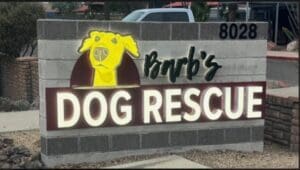
Combination-lit letters have an illuminated face and create a halo on the wall behind them. This gives you strong nighttime visibility along with some extra depth and personality.
This style can work well when a business wants bright identification from the road and an architectural lighting effect near the entrance. The face and halo can sometimes use different colors, depending on the logo and local sign requirements.
Combination lighting includes more components, so the letter construction, wiring, spacing, and wall surface all need to be worked out carefully.
External Lighting
Sometimes we light the sign from the outside.
Ground-mounted or building-mounted fixtures can illuminate dimensional letters, monument signs, or other non-illuminated signage. This can be a practical choice when the sign design uses stone, metal, wood, or another material that isn’t meant to glow.
External lighting is often used on monument signs, entrance signs, and architectural lettering. The fixtures need to be aimed properly so the light reaches the sign without creating bright spots, heavy shadows, or glare.
Landscaping also needs to be considered. A light fixture that works well on installation day may be blocked later if plants grow in front of it.
Exposed Neon
If you’re picturing old-school Las Vegas, you’re on the right track. Exposed neon is different from most modern illuminated signs because the light source is part of what you see. Glass tubes are bent into letters, shapes, or designs and filled with gas that creates the glow when the sign is powered.
There’s no acrylic face covering the light. The neon tubes are right there on display, giving the sign that unmistakable vintage look. You don’t see exposed neon used as often as you once did. LEDs are now used for most everyday commercial signage because they’re versatile, efficient, and easier to build into many types of signs.
Real exposed neon still has a character that’s hard to mistake. When a restaurant, bar, retail store, or entertainment business wants that classic appearance, it may be exactly the right fit.
Choosing the Right Sign Lighting
So which signage lighting type is best? It depends on the building, the brand, how far away the sign needs to be seen, and what the city allows. The color and material of the wall can also change the finished appearance.
Sometimes you want your sign to light up the whole storefront. Sometimes you want a soft glow around the letters. Some properties need externally illuminated monuments, while others need bright channel letters that can be read from a busy road.
At Bootz & Duke, we’ve been designing and building illuminated commercial signs in Arizona since 1964. We’ll look at the building, viewing conditions, brand, and sign code before recommending a lighting style.
Planning an illuminated sign for your business? Contact Bootz & Duke or request a free quote. We’ll help you choose a lighting option that looks good during the day and after the sun goes down.
Related Articles